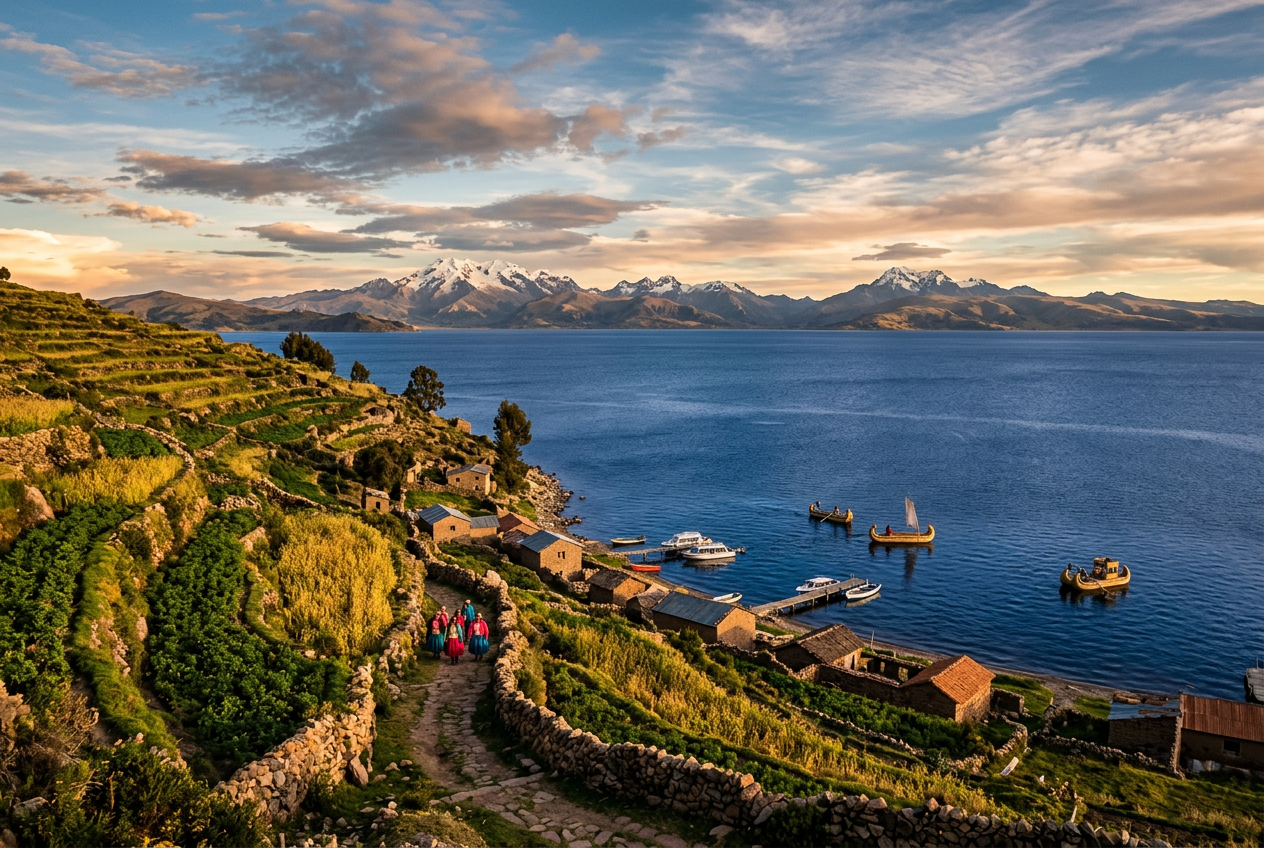
Quick Summary
- Lake Titicaca sits high in the Andes on the border of Bolivia and Peru.
- Copacabana serves as the main Bolivian gateway town.
- Isla del Sol is known for Inca legends and scenic hiking trails.
- Visitors experience indigenous culture, sacred ruins, and panoramic lake views.
Culture Uniqueness & Essential Phrases
Culture Uniqueness
- The lake is considered sacred in Andean cosmology and Inca mythology.
- Traditional reed boats and fishing practices remain part of daily life.
- Aymara heritage shapes textiles, festivals, and local customs.
- Catholic traditions blend with indigenous spiritual beliefs.
- Lake Titicaca reflects centuries of spiritual and cultural continuity.
Essential Phrases
- Hello: Hola (OH-lah)
- Thank you: Gracias (GRAH-see-ahs)
- How do I get to the island? ¿Cómo llego a la isla?
- How much is the boat ticket? ¿Cuánto cuesta el boleto del barco?
- Beautiful view: Qué vista tan hermosa
- Spanish and Aymara are widely spoken in the region.
Best Areas by Trip Type
Leisure & Vacation
- Copacabana Waterfront: The waterfront area offers lakeside hotels and easy access to boat departures.
- Isla del Sol (South Zone): The southern part of the island provides peaceful guesthouses and relaxed walking paths.
- Isla del Sol (North Zone): The northern section offers quieter accommodations surrounded by natural scenery.
- These areas provide scenic relaxation and a slower pace of travel.
Adventure & Outdoor
- Isla del Sol Ridge Trail: The ridge trail stretches across the island and rewards hikers with sweeping lake views.
- Cerro Calvario (Copacabana): This hilltop climb offers panoramic scenery, especially at sunset.
Kayaking on Lake Titicaca: Guided kayaking tours allow visitors to explore the shoreline from the water.
- Outdoor activities combine moderate hiking with high-altitude landscapes.
City & Cultural
- Copacabana Town Center: The town center features colonial architecture and local markets.
- Sacred Inca Sites on Isla del Sol: Archaeological remains reflect the island’s mythological importance.
- Local Villages: Small communities maintain agricultural terraces and traditional lifestyles.
- Cultural experiences focus on heritage and spiritual history.
Business
- Copacabana Main Plaza: The central plaza area hosts small hotels and tour offices suitable for short business stays.
- Local Tour Agencies: Tour operators coordinate boat transfers and island logistics.
- Transport Offices: Bus companies connect Copacabana to La Paz and Puno.
- Business infrastructure is modest but functional for tourism-related needs.
Best Areas by Traveler Type
Families often stay near Copacabana’s waterfront because it offers accessible amenities and gentle walking routes.
Couples prefer boutique guesthouses on Isla del Sol for romantic sunsets and peaceful surroundings.
Friends: Groups enjoy central Copacabana for convenient access to hiking trails and boat tours.
Solo travelers appreciate island hostels where communal dining encourages social interaction.
Selecting the right location enhances comfort and convenience.
Where to Go & What to Do
Bars & Nightclubs
- Copacabana Lakeside Bars: Lakeside venues offer casual drinks with scenic views.
- Central Plaza Pubs: Small pubs near the plaza provide relaxed evening atmospheres.
- Hostel Social Nights: Some hostels organize themed gatherings for travelers.
- Nightlife is low-key and centered around conversation and scenery.
Cafes & Restaurants
- Local Trout Restaurants: Many restaurants serve fresh lake trout prepared in traditional styles.
- Isla del Sol Guesthouse Kitchens: Guesthouses often prepare homemade meals using regional produce.
- Plaza Cafés: Cafés near the main square offer coffee with mountain views.
- Dining emphasizes simplicity and fresh ingredients.
Beaches & Lakes
- Copacabana Beach: The main beach area provides lakeside relaxation and boat departures.
- Isla del Sol Shoreline: The island’s rocky shores offer peaceful spots to enjoy the water.
- Hidden Coves: Small coves provide quiet areas for reflection.
- The lake remains the heart of every experience.
Parks & Squares
- Plaza Sucre (Copacabana): The main square serves as a gathering place for visitors and locals.
- Island Terraces: Agricultural terraces on Isla del Sol create scenic walking routes.
- Cerro Calvario Pathway: The hillside path includes small shrines and viewpoints.
- Public spaces blend spirituality with natural beauty.
Museums & Exhibits
- Museo del Poncho (Copacabana): This small museum showcases traditional textiles.
- Archaeological Sites on Isla del Sol: Ruins serve as open-air historical exhibits.
- Local Cultural Displays: Community centers occasionally present regional crafts.
- Museums are modest but culturally meaningful.
Landmarks & Viewpoints
- Sacred Rock (Roca Sagrada): This site is linked to Inca creation myths.
- Cerro Calvario Viewpoint: The viewpoint offers expansive lake and mountain panoramas.
- Pilkokaina Ruins: These ruins reflect Inca ceremonial architecture.
- Landmarks combine mythology with stunning scenery.
Churches & Temples
- Basilica of Our Lady of Copacabana: This basilica stands as an important pilgrimage site.
- Island Chapels: Small chapels reflect syncretic religious traditions.
- Hilltop Shrines: Shrines along Cerro Calvario represent local spiritual devotion.
- Religious sites reflect layered beliefs and traditions.
Towns & Villages
- Copacabana: This lakeside town functions as the main transport and accommodation hub.
- Yumani (Isla del Sol): Yumani provides scenic terraces and guesthouses.
- Challapampa (Isla del Sol): Challapampa offers quieter surroundings and archaeological access.
- Each settlement offers a distinct atmosphere.
Shops & Markets
- Copacabana Market Stalls: Market stalls sell textiles, crafts, and souvenirs.
- Artisan Vendors on Isla del Sol: Vendors offer handmade goods near main pathways.
- Local Grocery Stores: Small shops provide travel essentials.
- Shopping opportunities focus on local craftsmanship.
Gyms & Spas
- Hotel Wellness Services: Some hotels provide massage treatments.
- Yoga Sessions on the Island: Occasional group sessions take place in scenic outdoor spaces.
- Lakeside Relaxation Areas: Quiet guesthouse terraces encourage mindfulness.
- Wellness centers emphasize tranquility over luxury.
Hospitals & Pharmacies
- Copacabana Health Center: The town includes a basic medical clinic.
- Local Pharmacies: Pharmacies provide essential medications.
- Nearby La Paz Facilities: Larger hospitals are located in La Paz for serious conditions.
- Medical services are limited but available for minor needs.
Parking & Transport
- Copacabana Bus Terminal: The terminal connects travelers to La Paz and Peru.
- Boat Docks: Docks operate daily routes to Isla del Sol.
- Hotel Parking Areas: Some accommodations provide limited parking.
- Transportation revolves around buses and boats.
Art & Entertainment
- Local Festivals: Festivals feature music, dance, and traditional dress.
- Community Cultural Events: Small events celebrate Aymara heritage.
- Street Performers: Performers occasionally gather near the main plaza.
- Entertainment reflects living traditions rather than modern venues.
Amusement & Water Activities
- Boat Tours Around the Island: Boat tours explore multiple docking points and scenic shores.
- Kayaking Excursions: Guided kayaking offers close views of rocky coastlines.
- Fishing Experiences: Local guides sometimes offer traditional fishing trips.
- Water activities focus on immersive exploration.
Conclusion & CTA
- Lake Titicaca offers sacred landscapes, Andean traditions, and unforgettable high-altitude views . From Copacabana’s waterfront to Isla del Sol’s ancient paths, the region invites slow exploration and cultural discovery.
- Ready to plan your journey? Discover the best accommodations around Lake Titicaca and experience one of South America’s most legendary destinations.
Frequently Asked Questions
What is the best time to visit Lake Titicaca?
May to October generally offers dry weather and clearer skies.
How many days should I spend in Copacabana and Isla del Sol?
Two to three days allow time for hiking, boat trips, and cultural exploration.
Is Lake Titicaca very high in altitude?
Yes, the lake sits at high elevation, so visitors should acclimatize gradually.