Quick Summary
- Lake Titicaca, located in the Puno region of southern Peru, is the highest navigable lake in the world and one of South America’s most culturally significant destinations. Sitting at over 3,800 meters above sea level, the lake stretches across the border between Peru and Bolivia and is surrounded by dramatic Andean landscapes.
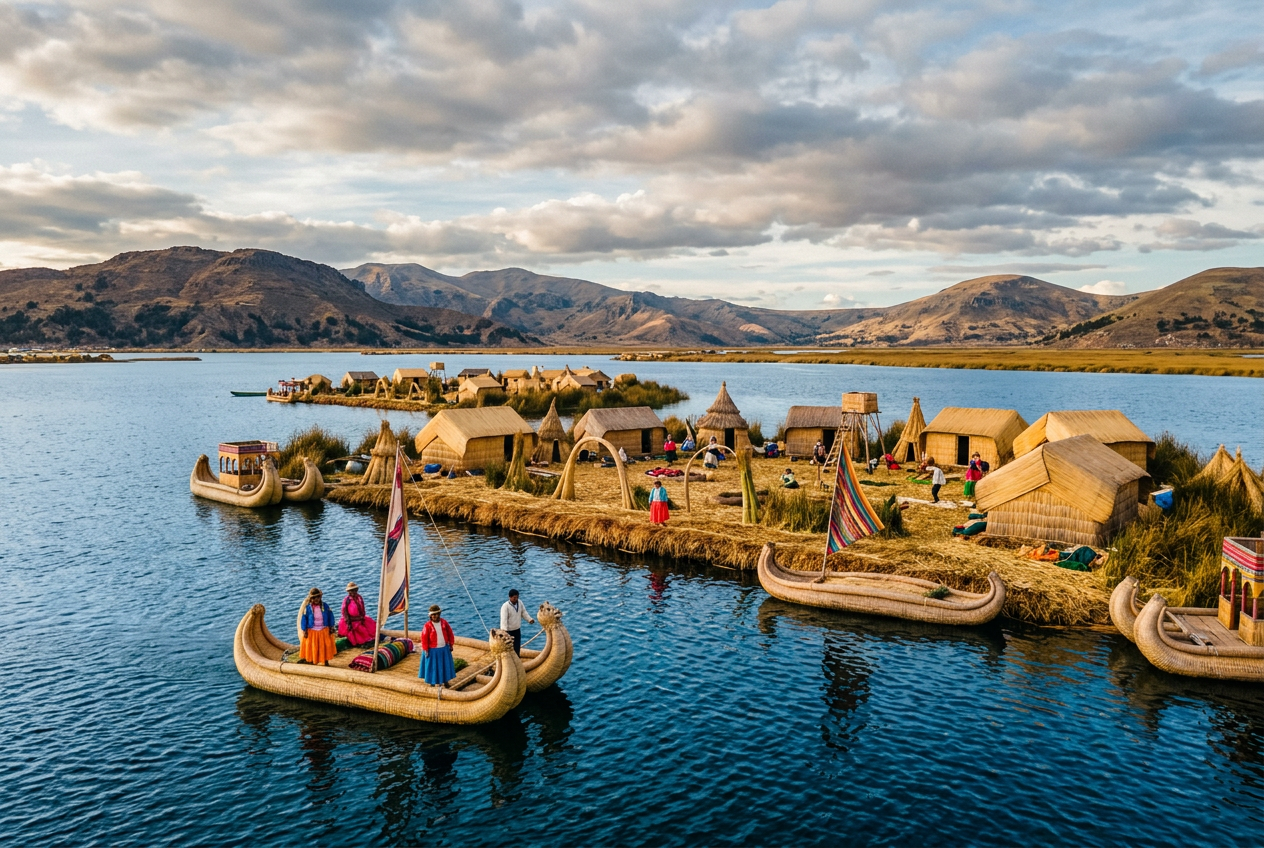
- The region is known for its Indigenous communities, floating reed islands, and centuries-old traditions that continue to shape daily life. Puno serves as the main gateway to the Peruvian side of the lake, offering access to island excursions, folklore festivals, and sweeping lake views.
- Lake Titicaca is ideal for travelers seeking cultural immersion, serene scenery, and meaningful high-altitude experiences.
Culture Uniqueness & Essential Phrases
Culture Uniqueness
- Uros floating islands constructed from totora reeds
- Strong Quechua and Aymara Indigenous heritage
- Vibrant folkloric festivals in Puno
- Colonial churches blending Andean and Spanish influences
- Traditional music featuring panpipes and drums
- Lake-based livelihoods centered around fishing and agriculture
The Lake Titicaca region preserves ancient traditions while welcoming visitors into communities that maintain distinct cultural identities.
Essential Phrases (Spanish & Aymara/Quechua)
- Hello (Spanish): Hola (OH-lah)
- Thank you (Spanish): Gracias (GRAH-syahs)
- Hello (Aymara): Kamisaraki (kah-mee-sah-RAH-kee)
- Thank you (Aymara): Yuspajarapxsma (yoos-pah-hah-RAHP-shmah)
- Where is the port? ¿Dónde está el puerto? (DON-deh es-TAH el PWER-toh)
- Spanish is widely spoken in Puno, while Aymara and Quechua are common in rural communities.
Best Areas by Trip Type
Leisure & Vacation
Puno Waterfront — The Puno waterfront is ideal for a relaxed stay because it offers scenic lake views and convenient access to boat tours.
Amantaní Island provides peaceful homestay experiences surrounded by panoramic views and traditional village life.
Adventure & Outdoor
Taquile Island is perfect for outdoor enthusiasts because it features scenic hiking paths and terraced hills overlooking the lake.
Sillustani offers dramatic landscapes and pre-Inca burial towers set above Lake Umayo.
City & Cultural
Puno City Center is the cultural heart of the region, hosting festivals, markets, and historic architecture.
Uros Islands — The Uros floating islands provide unique insight into traditional reed-based living on the lake.
Business
Central Puno offers established hotels and meeting facilities suitable for small conferences and group travel.
Port Area — The port area provides logistical convenience for tour operators and organized travel services.
Best Areas by Traveler Type
Families
- Best Areas: Puno Waterfront, Uros Islands, Amantaní Island
The Puno waterfront is suitable for families because it offers accessible accommodations and easy boat departures. The Uros Islands provide educational experiences that engage children with traditional lifestyles. Amantaní Island allows families to enjoy calm surroundings and community-based hospitality.
Couples
- Best Areas: Amantaní Island, Taquile Island, Puno Waterfront
Amantaní Island is ideal for couples seeking tranquil sunsets and intimate homestays. Taquile Island offers scenic walks and panoramic lake views that create romantic settings. The Puno waterfront provides comfortable lodging with beautiful sunrise and sunset scenery.
Friends
- Best Areas: Puno City Center, Taquile Island, Sillustani
Puno City Center is great for friends because it features restaurants, cultural performances, and nightlife. Taquile Island offers group hiking opportunities and shared cultural experiences. Sillustani provides impressive archaeological exploration suited for adventurous groups.
Solo
- Best Areas: Amantaní Island, Puno City Center, Uros Islands
Amantaní Island is ideal for solo travelers seeking meaningful cultural immersion. Puno City Center provides convenient access to tours and social interaction. The Uros Islands offer unique experiences that are easy to join through organized excursions.
Where to Go & What to Do
Bars & Nightclubs
- Bars in Puno City Center offer casual evening entertainment with regional music.
- Cultural venues near Plaza de Armas in Puno host traditional dance performances.
- Lakeside restaurants along the Puno waterfront provide relaxed nighttime atmospheres.
Beaches & Lakes
- Lake Titicaca shoreline near Puno offers scenic walking areas and panoramic viewpoints.
- Capachica Peninsula features quieter lakeside landscapes ideal for relaxation.
- Amantaní Island shores provide peaceful spots to enjoy the high-altitude lake environment.
Cafes & Restaurants
- Restaurants in Puno City Center serve regional dishes such as trout and quinoa-based meals.
- Cafés near Plaza de Armas offer comfortable spaces to relax between excursions.
- Lakeside dining in Chucuito highlights fresh fish from the lake.
Parks & Squares
- Plaza de Armas in Puno serves as the city’s main gathering point surrounded by historic buildings.
- The Pino Park provides shaded seating areas in the city center.
- Viewpoints along the Puno waterfront promenade offer open-air spaces with lake vistas.
Museums & Exhibits
- The Carlos Dreyer Museum in Puno presents pre-Columbian artifacts and colonial art.
- Cultural centers in Puno City Center showcase regional folklore and history.
- Community exhibits on Taquile Island display traditional textile craftsmanship.
Landmarks & Viewpoints
- The Sillustani burial towers stand dramatically above Lake Umayo.
- The Kuntur Wasi viewpoint overlooks Puno and the lake.
- The Uros floating islands serve as one of the region’s most iconic landmarks.
Churches & Temples
- The Puno Cathedral dominates Plaza de Armas with baroque architecture.
- The Church of San Juan reflects colonial religious heritage.
- The Santiago Apostol Church in Pomata showcases Andean baroque design.
Towns & Villages
- Chucuito is a quiet lakeside town known for colonial buildings and scenic views.
- Llanchón Village offers community-based tourism experiences on the Capachica Peninsula.
- Pomata features impressive churches and tranquil lake surroundings.
Shops & Markets
- The Puno Central Market sells fresh produce and local handicrafts.
- Artisan stalls near Plaza de Armas offer textiles and souvenirs.
- Markets on Taquile Island specialize in handwoven garments.
Gyms & Spas
- Wellness centers in Puno City Center provide massage services for altitude recovery.
- Small studios near the waterfront offer yoga sessions adapted to high elevations.
- Guesthouses on Amantaní Island sometimes provide relaxation spaces with lake views.
Hospitals & Pharmacies
- Regional hospitals in Puno City Center provide general medical services.
- Pharmacies near Plaza de Armas offer medication and altitude-related remedies.
- Clinics in Juliaca provide additional healthcare facilities near the airport.
Parking & Fuel Stations
- Parking areas in Central Puno support visitors exploring the city.
- Fuel stations along the Puno–Juliaca highway serve regional travelers.
- Designated parking spaces near the Puno port accommodate tour operators and visitors.
Art & Entertainment
- Folkloric performances in Puno City Center highlight traditional dance and music.
- Cultural festivals such as Virgen de la Candelaria fill the city with vibrant celebrations.
- Artisan workshops on Taquile Island demonstrate textile artistry.
Amusement & Waterparks
- Recreational boating activities depart from the Puno port for lake exploration.
- Outdoor recreation areas along the Capachica Peninsula provide family-friendly spaces.
- Seasonal fairs in Puno City Center host rides and community entertainment.
Conclusion & CTA
- Lake Titicaca is serene, cultural, and unforgettable . With floating islands, ancient traditions, and sweeping Andean views, the Puno region offers one of Peru’s most distinctive travel experiences.
- Whether you are traveling with family, planning a romantic retreat, exploring with friends, or venturing solo, Lake Titicaca promises meaningful encounters and breathtaking scenery.
- Ready to explore Peru’s high-altitude wonder? Discover curated stays and unique journeys with CentroStays
- City Name: Iquitos
Frequently Asked Questions
What is the best time to visit Lake Titicaca?
The dry season from May to September offers clearer skies and more stable weather conditions.
How many days should I stay?
Plan for 2–3 days to explore the main islands and cultural sites.
Is altitude sickness a concern?
Yes, the region sits above 3,800 meters, so gradual acclimatization is recommended.
Can I visit from Cusco?
Yes, Puno is accessible by train, bus, or car from Cusco.